
A speculative sci-fi tale across time, space, and legacy
Chapter One: The Mission
The year was 2179.
As humanity stood on the brink of collapse — environmental ruin, resource scarcity, and political unrest — one final hope shimmered in orbit: ChronoStar One, the first vessel capable of traveling both through time and space. Engineered to carry 100 of Earth’s best — scientists, engineers, and dreamers — it held enough supplies to last a full Martian year.
Their destination: Mars.
The time: 3 billion years in the past, when rivers still etched red canyons and the planet may have cradled life.
Their mission: Establish a permanent base, one built not for colonization or conquest, but memory.
At the helm stood Captain Lou Diederich, a war veteran and poet-soul. His orders were explicit:
Build an enduring monument. Carve a message into the Martian surface that future Earth astronomers could detect — a binary-coded archive preserving humanity’s story… and warning of its possible doom.
He called it: Operation Mnemosyne.
Chapter Two: The Signal
Erin Myles, chief engineer, had just completed assembly of the base’s communications array — a playful yet powerful dish known as Earworm. On a whim, she pointed it back at Earth, expecting to hear nothing but static. After all, Earth was a lava-choked wasteland at this time.
Instead, she picked up a signal. Clear. Human.
“Do not fear the silence. We have waited long enough.”
Bishop, the AI aboard ChronoStar One, confirmed it was quantum-encoded memory — not a transmission, but something embedded in the spacetime substrate itself. A message from an orbiting satellite… one that shouldn’t have existed 3 billion years ago.
Erin responded with a simple digital greeting.
The reply?
“Hello, Children of Diederich. We remember.”
Chapter Three: The Choice
A hologram accompanied the transmission — depicting crystalline cities floating over Earth’s primal oceans, manned by luminous beings called the Caretakers. They spoke directly to the crew:
“We are the Aletheia Concord. You have arrived too early. And yet — perhaps right on time.”
They showed two timelines:
- The Old Path — Earth forgets, Mars dies, and the signal is never understood.
- The Divergent Path — humanity heeds the warning, Mars is remembered, Earth is saved.
Lou listened. Then chose discipline.
Despite the contact, his orders stood:
Do not interfere. Do not explore beneath the surface. Do not touch native life. Record, encode, and leave the past intact.
Chapter Four: Eidolon Haven
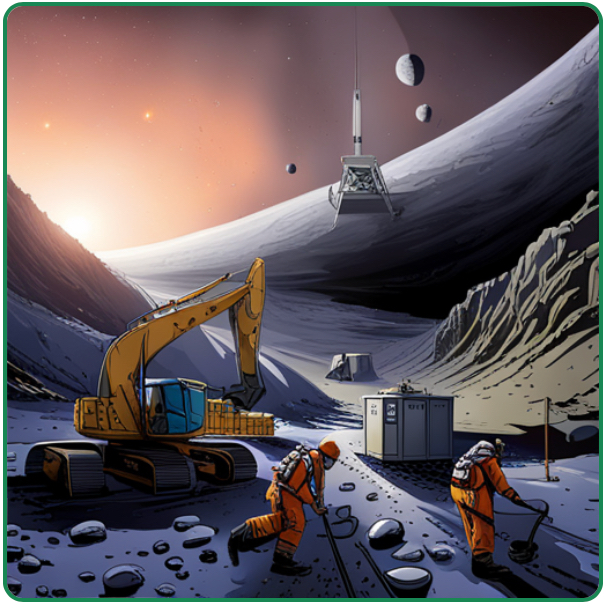
The crew built the base from native Martian stone. At its heart stood a towering obelisk called the Heartstone, inside of which lay a sealed quantum library:
- Atmospheric, water, and mineral data
- Plant DNA from Martian and Earth life
- Historical records of humanity’s rise — and its many falls
- A mathematical fingerprint proving peaceful intent
The message, etched in binary across 1,024 basalt blocks, was visible from orbit:
“We were here. We remembered. Choose well.”
They named the base Eidolon Haven — a spirit of memory and refuge.
Then, a question came through the rift:
“May we visit?”
Chapter Five: The Visitors of Light
At dawn on Mars Sol 348, the rift opened. Three luminous beings crossed into Eidolon Haven: Virel, Nomari, and Sael of the Aletheia Concord. They did not speak aloud, but through harmonic resonance — thoughts blooming directly into human minds.
“Most civilizations who reach this point choose power.
You chose memory.”
As a gift, they offered a stellar archive — the last sky of their origin world, now lost. In return, Captain Lou handed over a sealed cube containing Earth’s warning.
“Use it when the next ones forget. Let them choose again.”
Chapter Six: No Contact. No Interference.
Despite the tremors beneath Mars’ southern pole and biofilm detection in ice caverns, Lou forbade all entry or interference. The Aletheia had shown them the stakes.
Observation only.
The crew completed their data-gathering, encrypted it within the stone archive, and sealed the Heartstone. Before powering down the base’s core systems, Lou recorded one final message to Earth’s future:
“To those who find this:
We were here, but not for glory.
We came to remember. To warn.
You are not alone — but be cautious.
We knew the end. So we reached for the beginning.”
Epilogue: Rediscovery
Three billion years later, Earth’s orbiting satellite Kepler-Renaissance-6 detected an unnatural grid on the Martian surface — a monument built of stone, older than any civilization.
Decoded from orbit:
“This is Eidolon Haven.
We were you.
We remembered.”
One scientist whispered:
“What if we go back?”
[To be continued?]



 The Diederich Journal